€400 million frozen overnight
In March 2020, marketing calendars across Europe went blank. Trade shows cancelled. Factory open days impossible. Product launch events — gone. The entire BTL (below-the-line) machinery that B2B brands had relied on for decades to demonstrate products, build relationships, and close deals simply stopped.
But the budgets didn't disappear. They sat in spreadsheets, allocated, approved, going nowhere. Marketing directors faced a choice: return the money, or find a fundamentally different way to spend it.
The brands that chose to reinvent rather than refund discovered something that would permanently change how they think about customer engagement.
Why passive content failed the brief
The first instinct was predictable: produce more video. A documentary about the production process. A virtual tour hosted by someone in a hard hat. A keynote streamed over Zoom. These were safe, fast, and — as the data quickly showed — largely ineffective for the specific job BTL marketing had always done.
That job was never just to inform. It was to create a felt sense of confidence. The trade show visit, the factory open day, the in-person demonstration — these worked because they let a buyer experience the product, not just learn about it. They activated something that a slide deck or brand film never could.
"Decisions are made by participants, not observers. The brain processes an immersive environment differently from a video — and that difference shows up directly in purchase intent."
— B2B buyer behaviour research, Forrester 2022Research consistently shows that when people interact with a product representation — even a digital one — they develop higher perceived ownership, stronger emotional attachment, and significantly higher purchase intent compared to those who view the same product passively. This is not a minor uplift. The difference in conversion rates between passive and interactive formats typically ranges from 2× to 5×.
The birth of immersive digital
The brands that understood this constraint built something new: digital experiences that didn't just show the product, but let users move through it, interact with it, explore it on their own terms.
Case study: 3D production line tour
One of the clearest examples of immersive marketing done at scale: a major electronics manufacturer needed to communicate the precision and complexity of their hardware production process to buyers, procurement teams, and media — without requiring any of them to physically visit a facility.
The solution was a fully navigable 3D environment modelling the entire production line from end to end: component preparation, automated assembly, optical quality control, X-ray inspection of circuit boards, and final testing stages.
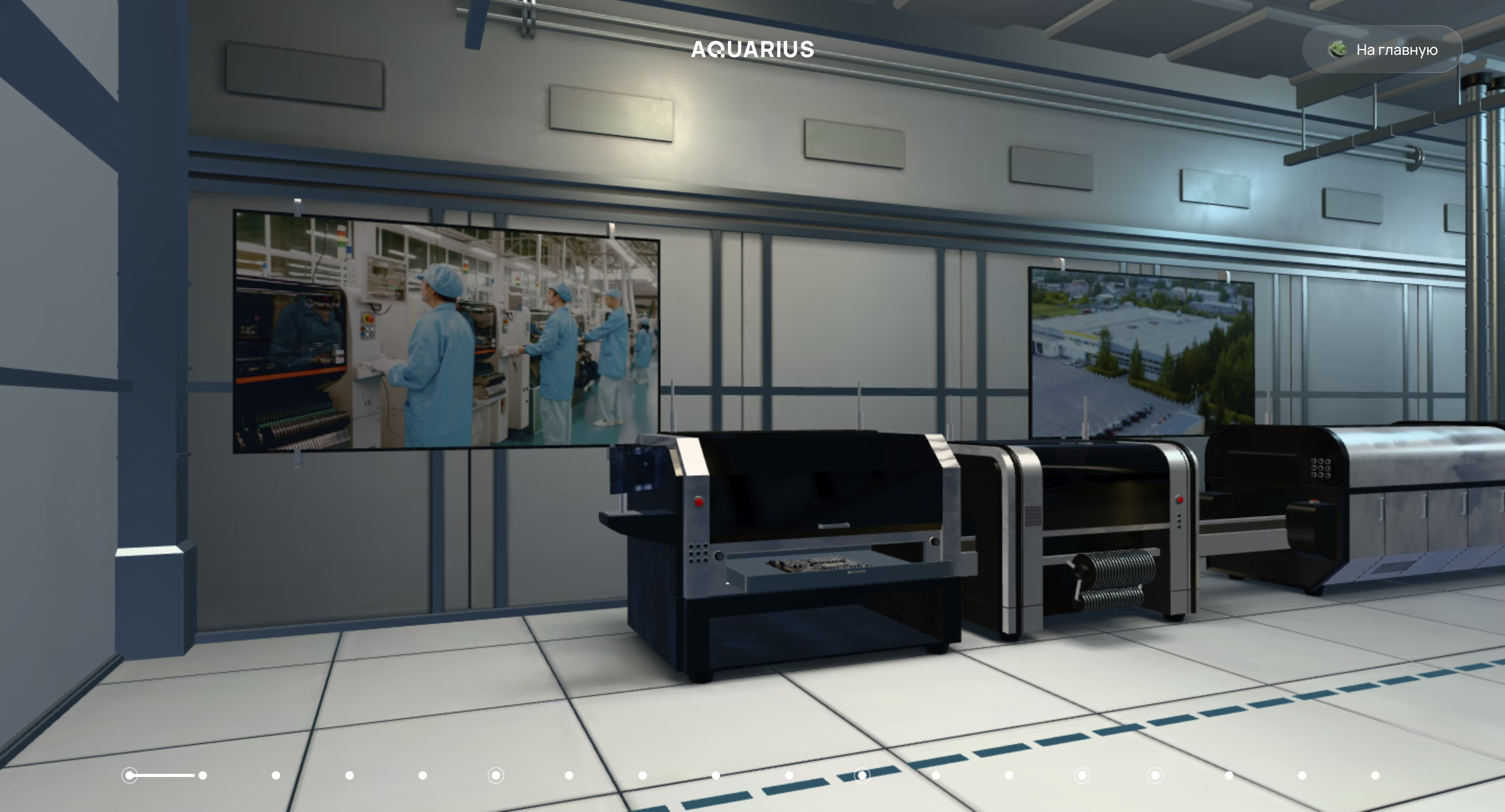
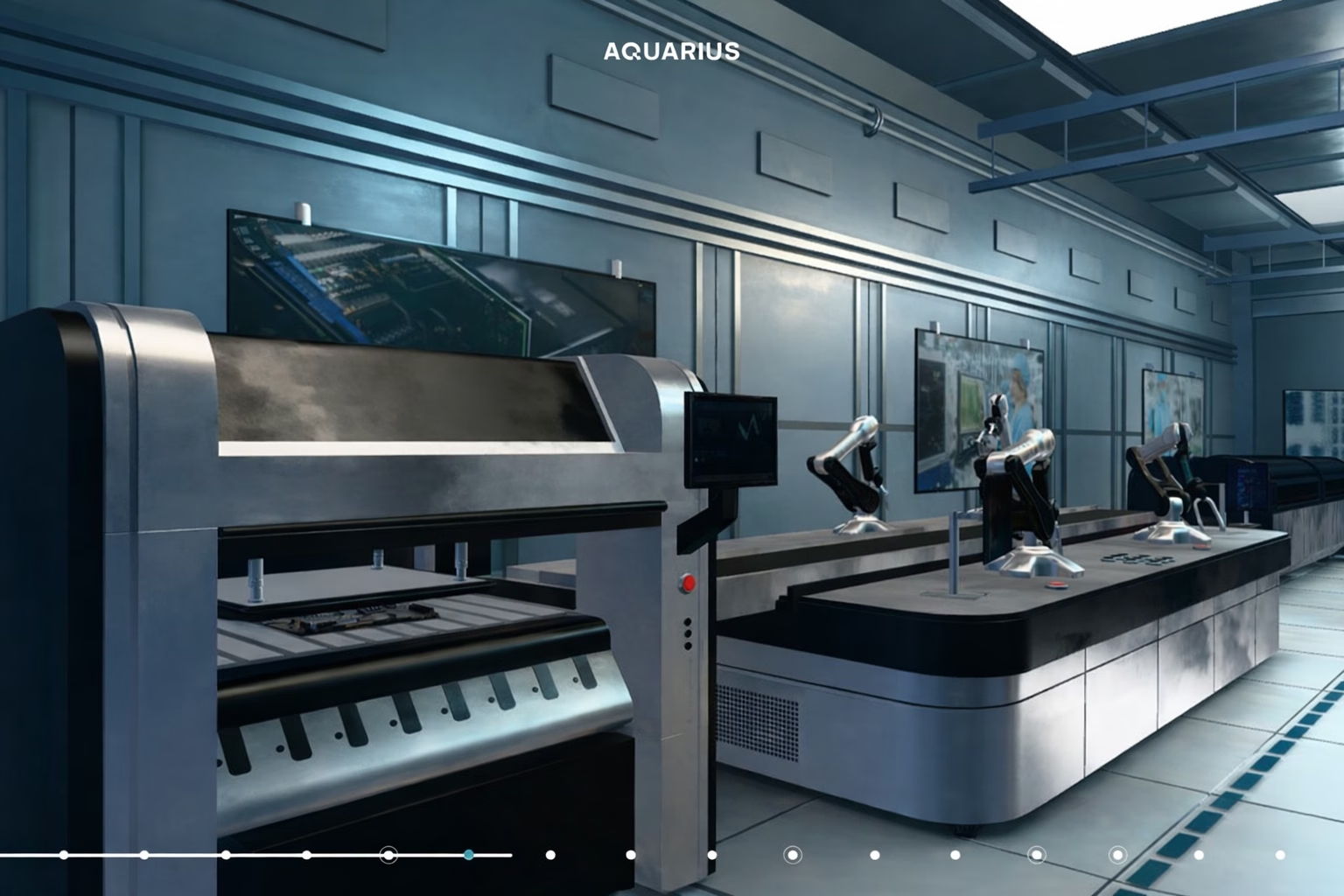
Component preparation. The first stage of the line — incoming materials are staged and prepared before automated processing begins. Each station is modelled with clickable hotspots that reveal technical specifications on demand.
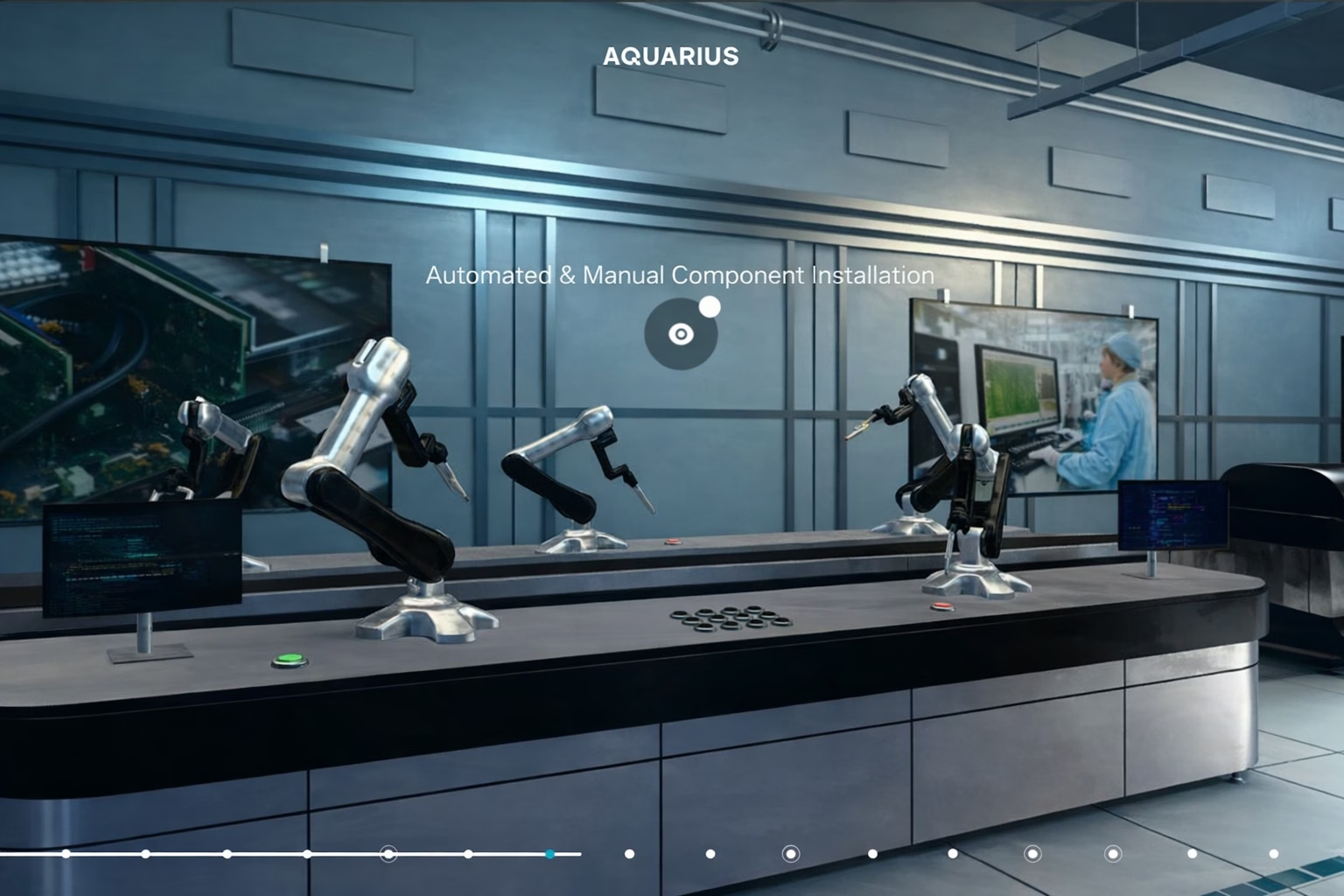
Automated and manual component placement. Six-axis robotic arms work in parallel, each calibrated for specific component types. The 3D environment lets visitors zoom in to individual stations — something physically impossible on a real factory tour.
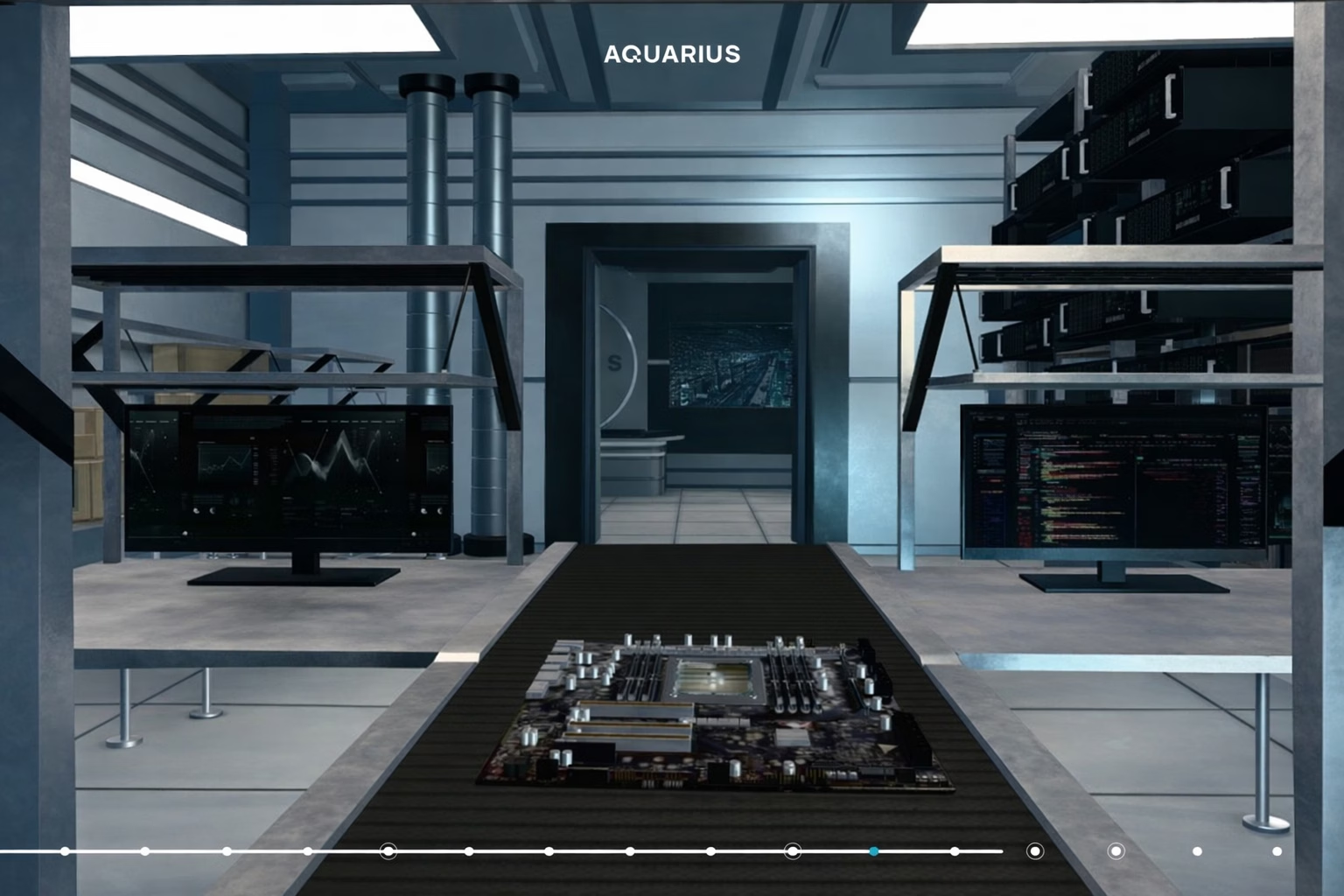
Board verification and monitoring. Completed assemblies move along the conveyor past a bank of diagnostic screens. Live monitoring data was embedded as an interactive layer — buyers could see what quality control actually looks like in production.
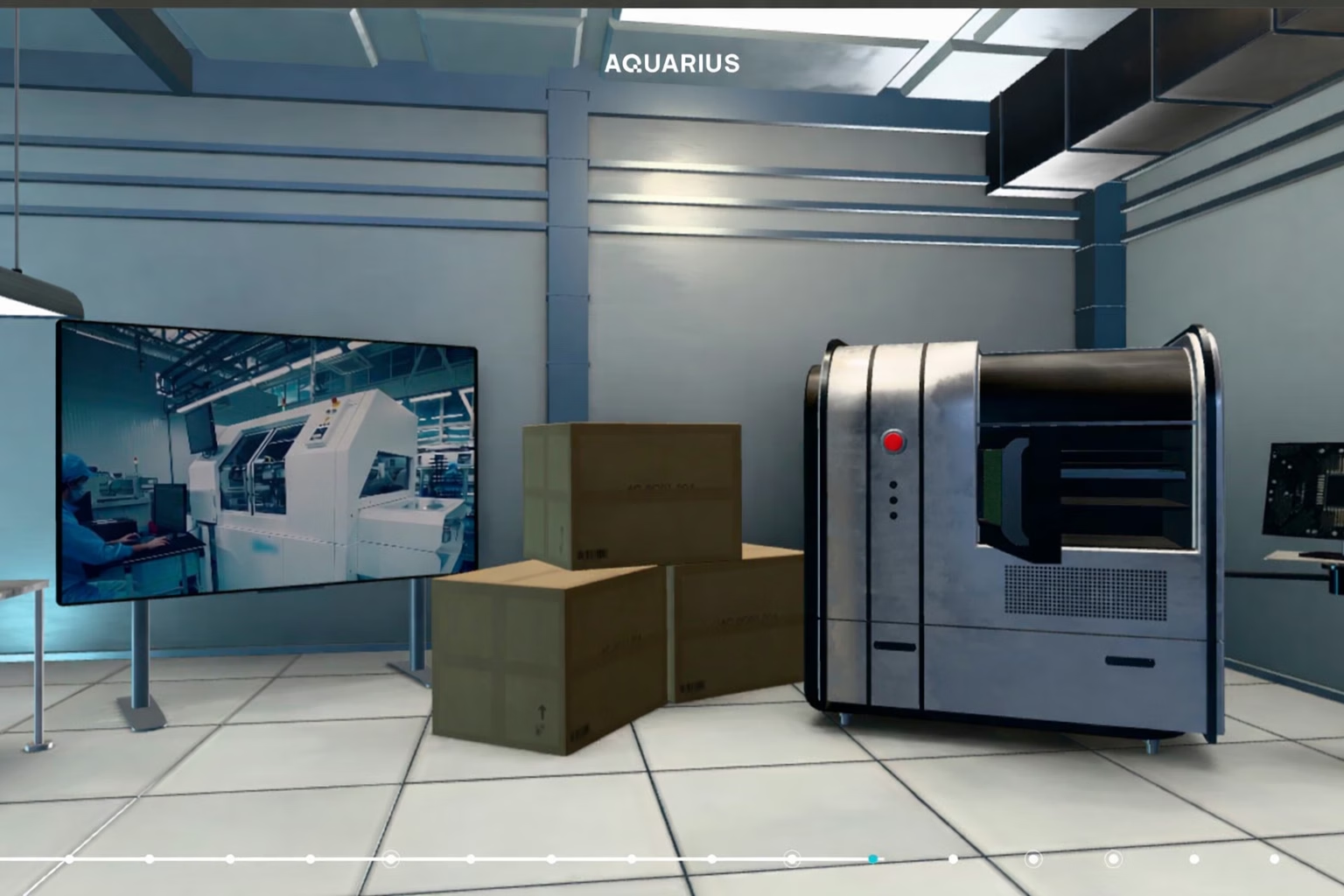
X-ray inspection. Non-destructive testing checks solder joint quality beneath the surface — invisible to the naked eye. This stage alone generated significant press interest: the idea that buyers could virtually witness a process most suppliers never show.
Where marketing ends and PR begins
This is the insight most brands missed initially, and that the sharpest ones learned to leverage deliberately.
When you build something technically complex — a real-time 3D environment, a WebGL-rendered factory floor, a configurator handling thousands of product variables — you have not just created a marketing asset. You have created a news story.
The production line tour described above generated substantial editorial coverage. Not in lifestyle publications — in industry trade media, technology press, and digital marketing journals. The coverage was not about the product being manufactured. It was about the fact that this experience had been built at all: how it worked technically, what it took to produce, what it meant for how industrial brands could communicate.
The new rule of immersive marketing: be so technically ambitious that the technology itself becomes the story. The product gets the first press release. The experience that demonstrates it gets the second — and often the bigger one.
For B2B brands with long sales cycles and multiple decision-makers, this creates a compounding effect. The immersive experience reaches buyers. The press coverage about the experience reaches an entirely different audience — one that wasn't actively looking for the brand, but now knows it's doing something no one else is doing.
The economics that make this obvious
The comparison looks unfair until you actually run the numbers.
A major trade show presence for a mid-sized European manufacturer — stand design, build, logistics, staffing, travel, hospitality — costs between €80,000 and €150,000 per event. It reaches a few hundred qualified visitors over two or three days, then it's over.
A well-built 3D immersive experience costs €25,000–60,000 to produce. It reaches visitors continuously, indefinitely, with full analytics on who visited, which sections they spent time in, and where they dropped off. The marginal cost of the 50,000th visitor is zero.
The cost-per-engagement gap is not subtle. It's an order of magnitude.
The formats that matter now
What comes next
The immersive experiences built between 2020 and 2024 were sophisticated information delivery systems. They let you go where you wanted, see what you wanted — but they didn't know who you were or what you were trying to accomplish.
The integration of AI into immersive environments changes this fundamentally. An AI layer on top of a 3D product environment can understand that the person navigating it is a procurement manager at a mid-sized manufacturer, evaluating two competing suppliers, with a primary concern around delivery time and compliance documentation — and it can guide the experience accordingly.
This is the convergence that defines the next phase: immersive environment + personalised AI guidance + real-time data integration. The space becomes a conversation. The product becomes something the buyer already understands before the first sales call.
"By 2027, the brands that win complex B2B deals won't just have better products — they'll have built environments where buyers could explore, understand, and emotionally commit before the first sales call."
— Bang Digital, 2026| Capability | Physical event | Passive digital | Immersive digital | AI + immersive |
|---|---|---|---|---|
| Reach | Hundreds | Thousands | Unlimited | Unlimited |
| Engagement depth | High | Low | High | Very high |
| Analytics | None | Basic | Full | Full + intent |
| Earned media potential | Medium | Low | High | Very high |
| Cost per engagement | €120–380 | €8–25 | €2–9 | €2–12 |
| Available 24/7 | No | Yes | Yes | Yes |
What this means if you're building a brand today
Three principles that hold across every sector and budget level:
Start with the decision, not the technology. The best immersive experiences are built backwards from a specific moment in the buyer journey where confidence or understanding breaks down. Don't commission a 3D environment because it's impressive — commission one because there's a specific gap between what your buyer needs to know and what they can currently learn from your website.
Build for longevity, not for launch. A physical trade show costs €100,000 and lasts three days. A digital immersive experience costs €40,000 and serves buyers for three years. Measure it accordingly — and build it to the quality standard that justifies that lifespan.
The technology is half the story. If you build something technically ambitious, tell that story separately. Write about it. Brief industry press. The "how we built this" narrative reaches audiences who would never engage with a product brochure — and it positions your brand in the category of companies that invent rather than follow.
The pandemic removed the excuse not to invest in immersive digital. Physical events came back — but the brands that had spent 18 months building immersive infrastructure discovered they had something they didn't want to give up: the ability to demonstrate, persuade, and build trust with buyers they would never meet in person. At scale. On demand. With data.
That capability doesn't become less valuable when travel restrictions lift. It becomes a permanent competitive advantage.
Want to build something people can explore?
We design and build immersive digital experiences for B2B and B2C brands across Europe — from interactive product configurators to navigable 3D environments.